Growth plan for Upper Echelon Products, 3 Oct 2026
Scale spend. Hold CAC.
The plan protects one number: a target CAC of $24, a line set under a $40.00 ceiling. I would test creative on the products whose pages already show review counts, starting with the REPEL Windproof Travel Umbrella at $39.99, and kill losers early.
- Target CAC
- $24
- New ads a week at peak
- 20
- Creators live by week six
- 10
- Test spend, six weeks
- $24,000
Contents
10 chapters, then the gates and every number’s source.
01 The number
Hold a $24 CAC while the umbrella sells at $39.99
The number to protect for Upper Echelon is a target CAC of $24. It is 0.6 × $40.00, the ceiling from a $50 average order at 40% margin with one repeat order. The $50 average order is my guess, since order data is not public. Week one replaces it with your real figures.
Protect
Target CAC: $24 on a first purchase
Ceiling = average order × margin × (1 + repeat orders): $50 × 40% × (1 + 1) = $40.00. Guard line = 0.6 × $40.00 = $24.00. Across the ranges: $5.24 to $161.99.
Three moves
- Kill losers early: ads that cannot approach the $24 guard line are paused before they eat the test budget.
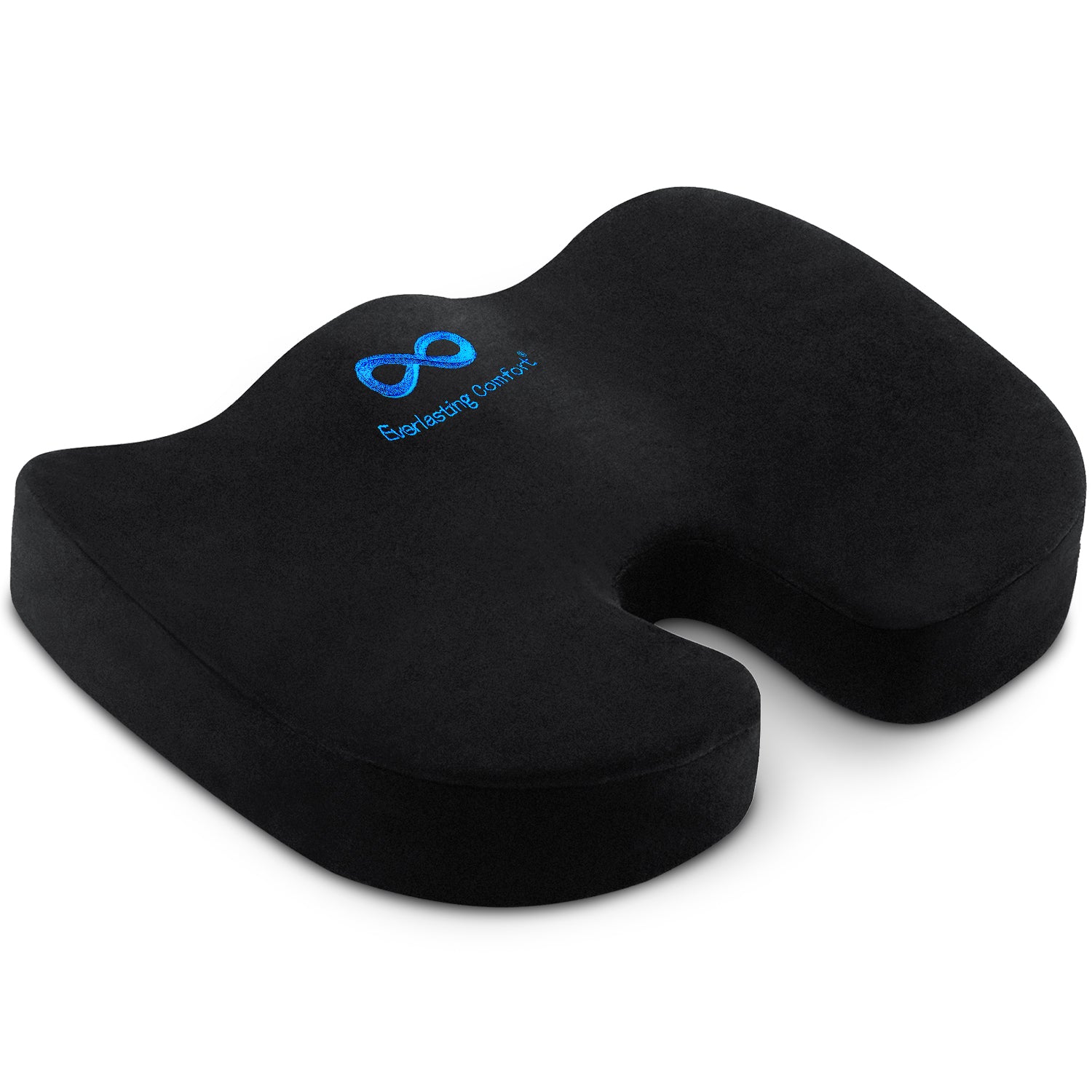
- Test one variable at a time on products such as the REPEL umbrella and the Everlasting Comfort seat cushion, so a result tells us why.
- Report daily CAC against the $24 line, so no spend increase happens without the number in view.
- Reviews shown on one page of the site
- 15845
- Published
- Star rating shown on a page, out of five
- 4.5
- Published
- Price of the REPEL Windproof Travel Umbrella
- $39.99
- Published
02 Variety
Cushions, lights and umbrellas each need their own hooks
Each concept has to carry one product, one buyer and one reason to click: the desk worker with the foot rest, the commuter with the REPEL umbrella, the sleeper with the white noise machine. Hook library by product, one variable per test, claims only in the brand's own wording.
| Reason to buy | Proof you already have | Ads (proposed) |
|---|---|---|
| Established in 2015 | Established in 2015, we are a leading consumer goods company. | 7 |
| Quiet 50HR humidifier | Quiet 50HR Runtime No-Filter Supersized Cool Mist Humidifier | 3 |
| 100% memory foam | 100% High-density Memory Foam | 3 |
| Rated by shoppers | Rated 4.5 out of 5 | 2 |
| Windproof travel umbrella | Withstands Winds up to 85MPH | 2 |
| Thousands of reviews | Based on 15845 reviews | 1 |
| Total | The ad concepts tab | 18 |

Each row is a reason to buy that the brand already has proof for. The count is how many of the ads carry it: a reason with a single ad is a bet, not a pattern, and the next batch of concepts moves toward the reasons that win.
03 Disturbances
Seven risks, including a $79.99 price with $69.99 struck through
| Disturbance | Likelihood | Impact | Owner | Gate (proposed) |
|---|---|---|---|---|
| Crossed-out prices that sit below the selling price, as on the Black Parker cushion at $79.99, hurt trust | Med | Med | Your team | No landing page launches with a struck-through price below the selling price. |
| Health wording such as “Doctor Recommended” on cushion titles may be rejected in ad review | Med | High | Both | Claims sheet signed off before the first ad ships; ads use only the brand's own literal wording. |
| Purchase events may not fire cleanly at checkout, so CAC would be unmeasurable | Med | High | Your team | A test purchase appears in reporting before week one spend goes live. |
| Creator supply lags the ramp of two new creators a week | Med | High | Me | Creators live match the ramp each week; two behind at week four triggers a recruiting push. |
| The $50 average order and 40% margin are guesses, so the $24 line may be wrong | High | High | Both | Real order value and margin replace both guesses in week one. |
| Low-priced items like the Triton pet hair tool at $9.99 may not carry a $24 CAC | High | Med | Me | Items priced under the $24 line are sold only in bundles or as add-ons, never as the lead ad. |
| Review widgets load by script, so proof may not render on mobile landing pages | Low | Med | Your team | Landing pages show review counts above the fold in a mobile test before launch. |
Scores are my read from outside the company, re-scored in week one with your data. Each risk has one owner and one gate that can be checked with a number, so nobody has to argue about whether it happened.
04 The ceiling
A $40.00 ceiling on a $50 average order is a guess until week one
| Line | Value | Status |
|---|---|---|
| Average order | $50 (range $9.99–$119.99) | Assumption Range from the site product prices (Published); the midpoint is a guess |
| Gross margin | 40% (range 35–45%) | Assumption Replace in week one |
| Repeat orders after the first | 1 (range 0.5–2) | Assumption Replace with cohort data in week one |
| Margin per customer, all orders | $40.00 | Calculated Average order × margin × (1 + repeat orders) |
| Guard line for CAC | $24.00 | Calculated 0.6 × the margin per customer |
The math, with the assumed lines
Ceiling = average order × margin × (1 + repeat orders): $50 × 40% × (1 + 1) = $40.00. Guard line = 0.6 × $40.00 = $24.00. Across the ranges: $5.24 to $161.99.
Range across the assumptions: $5 to $162.
Ceiling $40.00 is $50 × 40% × (1 + 1), guard line $24.00. The $50 and the 40% are guesses and the repeat order is a hypothesis; week one replaces them with your real numbers.
The ceiling is a range, not one number: the most a new customer can cost before shipping and packaging, which I do not have. Replace the guessed lines with yours and every figure below recalculates.
05 Test ramp
Six weeks, $24,000 of tests across the Everlasting Comfort range
| Week | New ads × budget / ad (proposed) | Weekly test spend | Cumulative | Creators posting | CAC target (proposed) |
|---|---|---|---|---|---|
| 1 | 12 × $250 | $3,000 | $3,000 | 0 | $24 |
| 2 | 12 × $250 | $3,000 | $6,000 | 2 | $24 |
| 3 | 12–20 × $250 | $4,000 | $10,000 | 4 | $24 |
| 4 | 12–20 × $250 | $4,000 | $14,000 | 6 | $24 |
| 5 | 20 × $250 | $5,000 | $19,000 | 8 | $24 |
| 6 | 20 × $250 | $5,000 | $24,000 | 10 | $24 |
The first two weeks run 12 ads at $250 each, $3,000 a week. Weeks three and four run 12 to 20 ads, $4,000 a week. Weeks five and six run 20 ads, $5,000 a week. The total is $24,000 of tests, and every ad is judged against the $24 line.
The math. Week 1: 12 × $250 = $3,000; Week 2: 12 × $250 = $3,000; Week 3: 16 × $250 = $4,000; Week 4: 16 × $250 = $4,000; Week 5: 20 × $250 = $5,000; Week 6: 20 × $250 = $5,000. Total $24,000 (96 ads × $250). A range such as 12–20 counts as its midpoint.
Weeks one and two test what the brand already has, rewritten per reason to buy. From week three, creator videos enter paid only after they beat their own account median. A range of new ads counts as its midpoint in the spend column.
06 Volume
20 to 80 concepts a month across cushions and humidifiers
Creative volume moves CAC because more concepts mean more winners. At 20 concepts the guess is 2 winners and $18,000 added a month; at 80 concepts, 8 winners and $72,000. Hit rate and spend per winner are an Assumption.
| Concepts tested / month | Hit rate (assumed) | New winners / month | Spend each winner holds (assumed) | Added spend at target CAC |
|---|---|---|---|---|
| 20 | 10% | 2 | $300 / day | $18,000 / month |
| 40 | 10% | 4 | $300 / day | $36,000 / month |
| 60 | 10% | 6 | $300 / day | $54,000 / month |
| 80 | 10% | 8 | $300 / day | $72,000 / month |
The math. 20 concepts × 10% = 2 winners × $300 × 30 days = $18,000 a month; 40 concepts × 10% = 4 winners × $300 × 30 days = $36,000 a month; 60 concepts × 10% = 6 winners × $300 × 30 days = $54,000 a month; 80 concepts × 10% = 8 winners × $300 × 30 days = $72,000 a month.
The hit rate and the spend each winner holds are placeholders. The first thirty days of tests replace them with real numbers, and the table is recalculated the same day.
07 Allocation
Put $100,000 behind proven umbrella and cushion ads
- Meta tests on creator videos for cushions and umbrellas
- $45,000
- 45%
- Scaling winners once CAC holds at the $24 line
- $25,000
- 25%
- Creator pay and product seeding
- $20,000
- 20%
- Landing pages and tracking fixes
- $10,000
- 10%
The $100,000 is a proposal; shares move toward winners only after CAC holds, and test money is not rolled into scaling.
The math. 45% × $100,000 = $45,000; 25% × $100,000 = $25,000; 20% × $100,000 = $20,000; 10% × $100,000 = $10,000. Sum 100% = $100,000.
This split is a proposal. It moves toward scaling as winners prove out, and toward testing when fatigue shows.
08 Channels
Meta first, then channels where cushion buyers already look
| Channel | Open when (proposed) | Why wait |
|---|---|---|
| Meta | Week one, with the first creator videos | Cushion and umbrella demos work in feed, and Meta gives the fastest read on CAC. |
| TikTok | When creators are live and a Meta hook holds CAC | The same creator videos can run here with the same hooks, at little extra production cost. |
| Google Shopping | When Meta CAC holds near the $24 line | Buyers searching for a foot rest or a bidet attachment already know what they want. |
| Email and SMS | When first orders flow | The $40.00 ceiling counts on a repeat order, and a flow is the cheapest way to earn it. |
| YouTube Shorts | When the hook library has winners | Winning umbrella and cushion hooks get a second home without new filming. |
A channel opens when its condition is true, not when the calendar says so. Until then the budget stays where the CAC is earned.
09 Payback
Payback decides: CAC $25 pays back only after repeat orders
Payback is the real constraint for a catalog of cushions and umbrellas. If CAC is $10 the first order pays it back with $30.00 left. At $25 it pays back only after repeat orders, with $15.00 left. At $45 or $55 it never does, and I stop. The $40.00 ceiling is why the target is $24.
Cumulative margin per customer, order by order, before CAC: $20.00, $40.00.
| CAC (scenario) | First-order margin | Year-one margin | Left after CAC | Payback |
|---|---|---|---|---|
| $10 | $20.00 | $40.00 | $30.00 | First order |
| $25 | $20.00 | $40.00 | $15.00 | After repeat orders |
| $45 | $20.00 | $40.00 | −$5.00 | Never: stop |
| $55 | $20.00 | $40.00 | −$15.00 | Never: stop |
The math. CAC $10: $40.00 − $10 = $30.00 left; pays back: First order; CAC $25: $40.00 − $25 = $15.00 left; pays back: After repeat orders; CAC $45: $40.00 − $45 = −$5.00 left; pays back: Never: stop; CAC $55: $40.00 − $55 = −$15.00 left; pays back: Never: stop.
Read each row left to right: the margin of the first purchase, the margin over the whole horizon, what is left after CAC, and the purchase on which the CAC is earned back. A scenario that never pays back is a stop, not a test.
10 Scope
Scope: creative, creators and reporting on a cushion catalog
Covers
- Paid social creative and testing on Meta for the umbrella, cushion and humidifier lines
- Creator recruiting, briefs and payment for the first ten creators
- Landing page briefs built around each product's own wording and review counts
- Daily CAC, weekly learnings and monthly cohort payback reporting
Doesn’t
- Event tracking: I spec it, your team builds it
- Product, pricing and listing changes on your store
- Fulfilment, customer service and returns
- Health or efficacy claims beyond the brand's own wording
What this plan covers is what I can change inside the ad account and the creator program. Everything outside it is named on the right so nobody assumes it is handled.
Gates, written before spend, so stopping isn’t a negotiation.
| Day | Keep going if (proposed) | Stop or change if |
|---|---|---|
| Day 14 | Tracking matches your orders, the first creators are live and tests run at $3,000 a week. | Purchases do not reconcile with your order data. |
| Day 30 | At least one concept holds CAC under $40.00 and daily reporting has run without gaps. | No concept gets under $40.00 CAC after $14,000 of tests. |
| Day 60 | CAC on winners is at or under $24, and scaled spend has not pushed it above $40.00. | CAC stays above $40.00 after scaling the winners. |
| Day 90 | CAC is at or under $25, with payback shown after repeat orders in the cohort report. | CAC at $45 or more: payback never comes, so I stop. |
Each gate is checked on its day with the numbers in the daily and weekly reports. If the stop condition is true, the spend stops and nothing renews until we talk.
What exists, what’s missing, and the order that’s forced.
| Piece | Exists today | Missing | Forced order |
|---|---|---|---|
| creators | Cushions and the REPEL umbrella, easy to demo on camera | Creator briefs and a first pair of creators | 1st |
| claims sheet | Titles with “Doctor Recommended” on cushion listings | Approved wording list for every health-adjacent line | Week 1 |
| creative | Product pages with review counts, up to “15845 Reviews” | Ad concepts and a hook library per product line | 2nd |
| landing pages | Separate pages per colour, such as REPEL Umbrella Pastel Mint | One page per angle, with proof above the fold | 2nd |
| reporting | Prices from $9.99 to $103.99 to model order value | Daily CAC view and purchase events tied to products | Week 1 |
The order is forced on purpose: creative and creators come first because they are what moves CAC, and everything else waits for that data.
Every number, and where it came from.
| Figure | Where it came from | Type |
|---|---|---|
| 15845 Reviews shown on one page of the site | https://upperechelonproducts.com/ | Fact |
| 4.5 Star rating shown on a page, out of five | https://upperechelonproducts.com/ | Fact |
| $39.99 Price of the REPEL Windproof Travel Umbrella | https://upperechelonproducts.com/products/repel-windproof-travel-umbrella-compact-withstands-winds-up-to-85mph-strongest-premium-auto-folding-umbrella-for-rain-and-sun-durable-light-portable-for-women-men-fits-backpack-cars-2 | Fact |
| Product prices $9.99–$119.99 | product prices in the site product data (120 products), read 2026-10-03 | Fact |
| $50 average order · 40% margin · 1 repeat order | Placeholders, replaced in week one | Assumed |
| $24 target CAC | 0.6 of the $40.00 margin per customer | Calculated |
| $40.00 margin per customer | Price × (margin − discount), summed over the orders | Calculated |
| $24,000 of tests (96 ads × $250) | Danilo’s plan, matches Month one | Calculated |
| 0→10 creators in 6 weeks · 7 videos per creator a week | Danilo’s plan, matches Month one and the Creator engine | Proposed |
| $100,000 first budget split 45% / 25% / 20% / 10% | Danilo’s plan, re-set with the team in week one | Calculated |
| 10% hit rate · $300 a day per winner | Placeholders, replaced by the first 30 days of tests | Assumed |
| 303 creator videos a month at 10 creators | 10 creators × 7 videos a week × 52 ÷ 12 | Calculated |
| $5.74 per 1,000 views against a $1 target | Creator cost over the views the assumptions give | Calculated |
| $1,000 base pay · $50 bonus past 100,000 views | Danilo’s plan | Proposed |
| 1,500 median views · 4% breakout (10×) · 0.5% viral (750,000) | Placeholders, replaced by the first month of posts | Assumed |
| Pay bands $300–$600, $500–$1,000, $800–$1,500 | Danilo’s plan | Proposed |
Every figure on this page is listed here with where it came from. Fact means read on the site. Assumed and Proposed are Danilo’s own numbers, to be replaced in week one. Calculated is plain arithmetic on those, with the formula shown next to it.
Month one is where it starts.
Week one: I read your order data, replace the $50 and 40% guesses, brief the first two creators on the REPEL umbrella and the Everlasting Comfort seat cushion, and spec the purchase events with your team. First ads go live against the $24 line.